

 By
By Best Way To Clean Your Kitchen Towel

“Proud Homemaker is part of several affiliate marketing programs, so we may earn commissions on products selected and purchased through our retailer links”
Keeping your kitchen towel clean is essential for maintaining a fresh and hygienic cooking space. These hardworking clothes deal with spills, stains, and bacteria daily, so they need some TLC to stay in top shape. The good news is that getting them clean isn’t complicated, and experts have some great tips to make sure they’re not only spotless but also germ-free. Whether you’re dealing with stubborn stains or just want to freshen them up, there are straightforward and effective ways to keep your towels in great condition.
Regular cleaning ensures that your kitchen towels remain both functional and safe to use. When towels are kept clean, they can effectively do their job without spreading germs around your kitchen. Plus, a fresh-smelling towel is always nicer to work with! By following expert advice on maintaining your kitchen towels, you can enjoy a cleaner, healthier kitchen environment every day.
Read about: How to get rid of fruit flies
Can you clean kitchen towels by boiling them?
Boiling kitchen towels can be a powerful method for deep cleaning, especially if they’ve accumulated tough stains or odors. The high temperature helps to break down grease and grime, and it can effectively kill germs and bacteria that might be lurking in the fabric. Adding a small amount of detergent or baking soda to the boiling water can boost the cleaning action, making sure your towels come out fresh and spotless.
Read also: step-by-step can opener cleaning guide
However, it’s important to be cautious with this method. Not all kitchen towels are designed to handle boiling temperatures, so always check the care instructions on your towels to avoid damaging them. You also need to ensure that you have a pot that is large enough and sufficient water to fully submerge the towels. After boiling, rinse them thoroughly with clean water and dry them completely to maintain their quality and effectiveness.
Read also: How to clean rust with aluminum foil
What are some of the best practices for kitchen towel care?
Taking good care of your kitchen towels helps keep them clean, effective, and long-lasting. Here are some best practices:
1. Wash Regularly: It’s essential to wash kitchen towels after each use, especially if they’ve come into contact with raw meat or spills. Regular washing helps prevent the buildup of bacteria and keeps odors at bay. If you use your towels frequently throughout the day, having a few extras on hand can help you stay on top of laundry without falling behind.
2. Use Hot Water: Washing towels in hot water helps dissolve grease and oils more effectively than cold water. The high temperature also aids in killing harmful bacteria and ensuring a more thorough cleaning. However, be sure to check the care instructions on your towels, as some fabrics might shrink or get damaged if exposed to excessive heat.
3. Avoid Fabric Softeners: Fabric softeners can coat towel fibers, reducing their absorbency over time. This means your towels won’t be as effective at drying dishes or wiping up spills. Instead of softeners, use a good detergent that’s designed for heavy-duty cleaning and helps maintain the towel’s absorbency.
Read also: how to remove scuffs from walls
4. Pre-Treat Stains: Before tossing towels into the wash, treat any visible stains to ensure they come out completely. Applying a stain remover or a paste of baking soda and water directly to the stain can help lift it out. Let it sit for a few minutes before washing to maximize the stain removal process.
5. Use Bleach or Disinfectants: To keep your towels as hygienic as possible, consider adding a small amount of bleach or a disinfectant to the wash occasionally. This helps eliminate any remaining bacteria and viruses. Be cautious and follow the manufacturer’s guidelines for bleach usage to avoid damaging your towels or affecting their colors.
6. Dry Thoroughly: Proper drying is crucial to prevent mold and mildew. Towels should be dried completely, either in a dryer on a high heat setting or by hanging them in a well-ventilated area. Ensuring towels are fully dried helps maintain their texture and effectiveness and avoids any musty smells.
7. Rotate Towels: Keeping a rotation of clean towels ensures that you always have fresh ones available and helps prevent excessive wear on any single towel. This practice also helps distribute the cleaning load evenly and extends the lifespan of each towel by preventing overuse.
8. Avoid Overloading the Washer: For the best cleaning results, avoid overloading the washing machine with too many towels at once. Overloading can prevent the towels from getting properly cleaned and rinsed, leaving behind detergent residues and grime. Wash towels in smaller batches to ensure they come out clean and fresh.
9. Check Care Labels: Always adhere to the care instructions provided on the towel labels. This ensures you are using the correct washing and drying methods to preserve the fabric’s quality and avoid any damage. Different materials may have specific requirements, so checking the labels helps in maintaining the towel’s integrity and longevity.
Read also: DIY window cleaner recipe
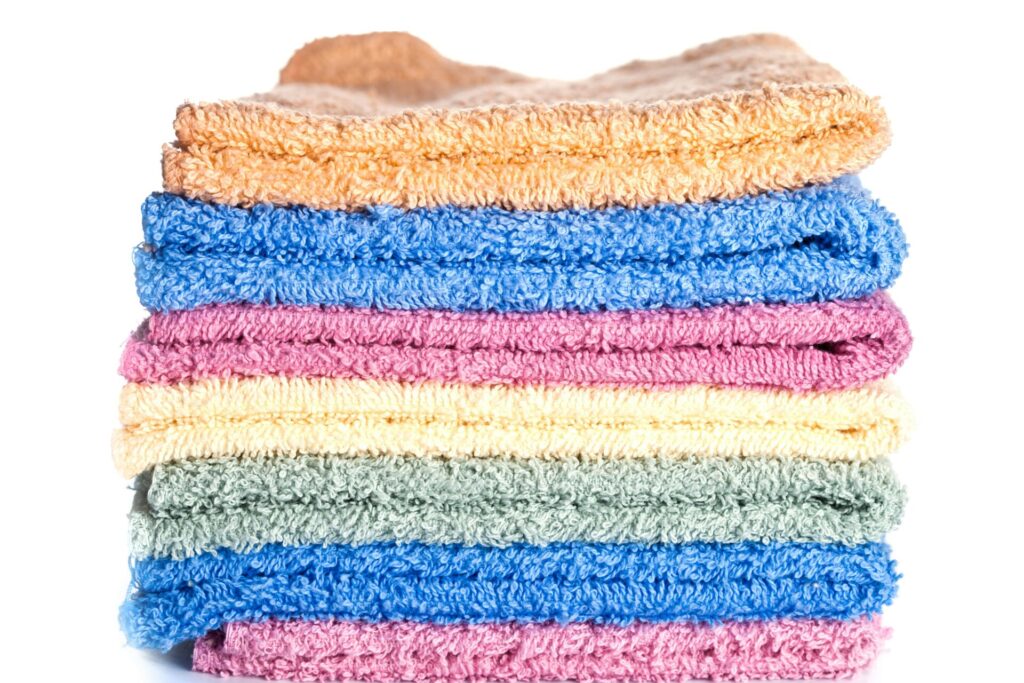
What is the best way to boil a kitchen towel?
To boil your kitchen towels, start by filling a large pot with enough water to fully submerge the towels, and bring it to a rolling boil. If desired, add a small amount of detergent or baking soda to enhance the cleaning process. Carefully place the towels into the boiling water, using a long spoon or tongs to ensure they are fully immersed. Let them boil for about 10-15 minutes, stirring occasionally. After boiling, remove the towels, rinse them thoroughly with cool water to remove any residue, and then dry them completely either in the dryer on a high heat setting or by hanging them up to air dry. This method helps to deeply clean and sanitize your towels, effectively removing stains and odors.
How Often Should You Replace Kitchen Towels?
Even with proper care, kitchen towels don’t last forever. Experts recommend replacing towels every 6–12 months, depending on how often they’re used. Signs that it’s time to replace include fraying edges, permanent stains, lingering odors, or loss of absorbency. Keeping an eye on these signs ensures you’re not holding onto towels that may harbor bacteria.
Read also: How to deep clean your oven and electric kettle
Can You Wash Kitchen Towels with Clothes?
While it might be tempting to toss kitchen towels in with regular laundry, it’s best to wash them separately. Towels often carry food particles, grease, and bacteria that could transfer to your clothing. Washing them in a dedicated load with hot water and heavy-duty detergent ensures they get the deep clean they need without contaminating your clothes.
Natural Alternatives for Cleaning Kitchen Towels
If you prefer to avoid bleach and harsh chemicals, there are several natural ways to disinfect and refresh your towels:
- White Vinegar: Breaks down grease, neutralizes odors, and restores softness.
- Baking Soda: Lifts stains and deodorizes.
- Lemon Juice: Naturally brightens fabrics and helps cut through grease.
- Sunlight: Hanging towels outside not only dries them but also naturally disinfects thanks to UV rays.
These methods are safe, eco-friendly, and gentle on fabrics.
Why Do Kitchen Towels Smell Even After Washing?
Sometimes towels develop a musty odor that lingers even after a wash. This usually happens when towels aren’t dried completely, detergent residue builds up, or bacteria remains trapped in the fibers. To fix this, try:
- Washing in hot water with vinegar instead of detergent.
- Adding baking soda to the wash cycle.
- Drying towels on high heat or in direct sunlight.
A regular deep-clean with these methods can prevent odors from coming back.
Should You Have Separate Towels for Different Kitchen Tasks?
Yes, it’s a smart idea! Using different towels for different purposes helps reduce cross-contamination. For example:
- One towel for drying hands
- One towel for dishes
- One towel for cleaning spills
- Paper towels (or disposable cloths) for raw meat messes
Color-coding your towels or using patterned ones for specific tasks makes it easier to keep them separate and hygienic.
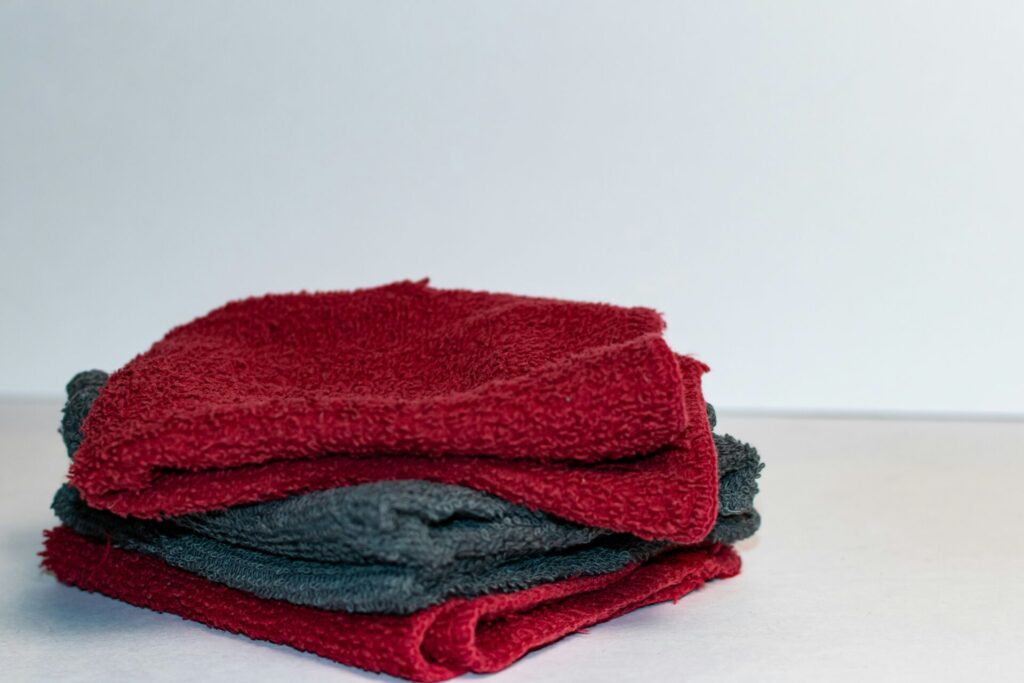
How to Store Kitchen Towels Properly
Proper storage is just as important as proper washing. Always make sure towels are completely dry before folding and storing them. Keep clean towels in a dry drawer or basket, and avoid storing them in damp areas like under the sink. You can also roll towels instead of folding to save space and make them easier to grab when cooking.
FAQs on Kitchen Towel Cleaning
1. How often should I wash my kitchen towels?
Ideally, kitchen towels should be washed daily if you cook frequently. Towels that touch raw meat or spills should be replaced and washed immediately.
2. Can I use vinegar to clean kitchen towels?
Yes! Vinegar is a natural disinfectant and deodorizer. Add half a cup to the rinse cycle to remove odors and restore softness.
3. Is it safe to put kitchen towels in the dryer?
Absolutely. In fact, drying towels in a hot dryer cycle helps kill any remaining germs. Just avoid overdrying to prevent fabric damage.
4. Why do my towels smell even after washing?
This usually happens if they weren’t dried thoroughly or if detergent buildup is present. Try washing with hot water and vinegar, then drying completely.
5. Can I wash kitchen towels with other laundry?
It’s best to wash them separately, especially if they’re heavily soiled. Mixing them with clothes can transfer bacteria and odors.
6. How do I get grease stains out of kitchen towels?
Pre-treat with dish soap or baking soda paste before washing. Hot water also helps break down grease.
7. How many towels should I keep in rotation?
Having at least 5–7 towels per person in the household is a good idea. This way, you always have a fresh one ready.
8. Should I iron my kitchen towels?
It’s optional! Ironing can make them look neat, but it’s not necessary for hygiene. Just ensure they’re clean and fully dry.
Was this article helpful? We’d love to hear your feedback, ideas, or any blog post requests you have—drop them in the comments below!



4 Comments